
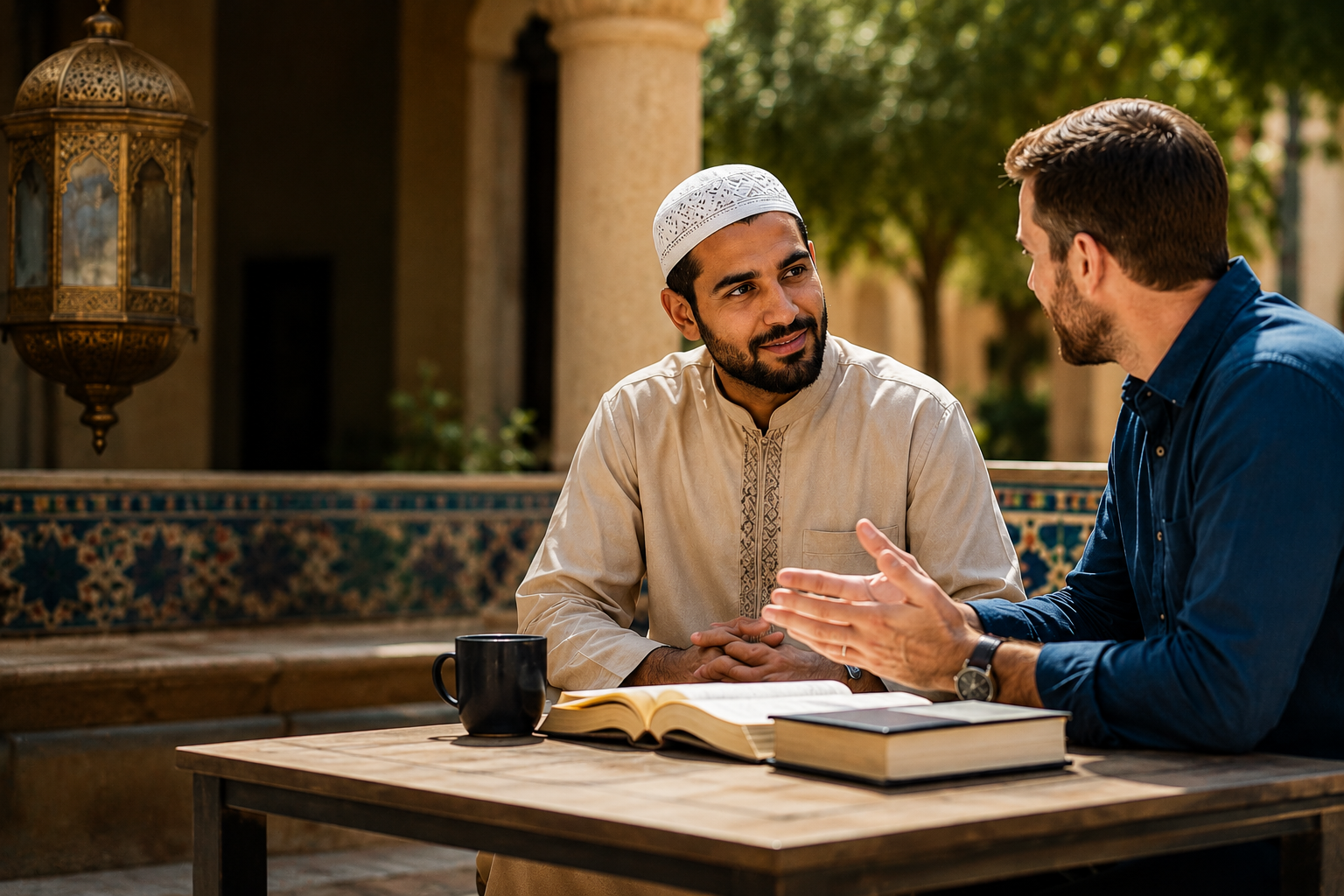
A Bible study on building bridges, clarifying truth, and pointing to the person of Jesus—with gentleness, respect, and conviction.
Posture Before Content
“Always be prepared to give an answer… with gentleness and respect.” — 1 Peter 3:15
Before theology comes posture. Scripture reminds believers that the Lord’s servant must be kind, patient, and not quarrelsome. Effective gospel conversations begin with humility, respect, and genuine care for the person in front of us.
Many Muslims already hold Jesus (Isa) in high regard. The goal is not to introduce Jesus for the first time, but to explore together who He truly is and what His life, teachings, death, and resurrection mean.
Starting with Common Ground
One of the most effective ways to engage Muslims is by beginning with beliefs that both Christians and Muslims share.
One God
Both Christianity and Islam affirm that there is only one God.
The Virgin Birth
The Qur’an affirms that Jesus was born of a virgin, giving Him a unique and miraculous origin.
Miracles
Both traditions acknowledge that Jesus performed extraordinary miracles.
The Messiah
The Qur’an refers to Jesus as Al-Masih (the Messiah), a title not given to any other prophet.
These shared beliefs provide a natural bridge for deeper conversations about Jesus.
The Identity of Jesus
The central question is not simply whether Jesus was a prophet, but who He truly is.
What the Bible Says
The Bible presents Jesus as far more than a messenger:
- “The Word was God… and became flesh” (John 1:1,14).
- “In Christ all the fullness of the Deity lives in bodily form” (Colossians 2:9).
- “I and the Father are one” (John 10:30).
What the Qur’an Says
The Qur’an describes Jesus with unique titles:
- A “Word from God” (Qur’an 3:45).
- “His Word” and “a Spirit from Him” (Qur’an 4:171).
These descriptions create opportunities for thoughtful discussion about the unique place Jesus occupies in both faith traditions.
Understanding the Title “Son of God”
For many Muslims, the phrase “Son of God” is one of the greatest obstacles to understanding Christian belief.
Christians do not mean that God physically fathered a child. Rather, the title expresses Jesus’ unique and eternal relationship with the Father.
In the New Testament, Jesus’ claim to sonship was understood as a claim to equality with God. Hebrews 1:3 describes Him as “the radiance of God’s glory and the exact representation of His being.”
When discussing this topic, clarity and patience are essential. Much misunderstanding arises from different definitions of the same words.
The Crucifixion and Salvation
The message of the cross lies at the heart of Christianity.
The Biblical Teaching
The Bible teaches that:
- All people have sinned.
- God is both perfectly just and perfectly merciful.
- Jesus willingly took upon Himself the penalty of sin.
- Through His sacrifice, forgiveness and reconciliation with God become possible.
Isaiah ch. 53, Romans 3:23–25, and John 3:16 all point toward God’s redemptive plan through Christ.
A Point of Difference
Christians and Muslims differ significantly regarding the crucifixion. While the New Testament presents Jesus’ death and resurrection as central to salvation, Islamic tradition understands these events differently.
Rather than turning this difference into an argument, it can become an opportunity for meaningful dialogue about God’s justice, mercy, and plan of redemption.
Why Jesus Matters
Jesus made claims unlike any other religious leader:
“I am the way, the truth, and the life. No one comes to the Father except through me.” — John 14:6
Christianity teaches that humanity’s deepest problem is sin and separation from God. The gospel proclaims that Jesus bridges that gap.
According to Scripture:
- God is holy.
- Sin separates humanity from God.
- Human effort cannot remove sin completely.
- Jesus provides the solution through His life, death, and resurrection.
The Christian message is ultimately not about earning acceptance with God, but receiving His grace through faith.
A Strategic Conversation Path
Rather than beginning with debate, consider asking thoughtful questions that encourage reflection:
- Why is Jesus given such a unique status?
- What does it mean for Jesus to be called the Word of God?
- How does God deal with sin while remaining perfectly just and merciful?
- Can good deeds fully remove guilt?
- Why is Jesus central to God’s plan of salvation?
Questions often open doors that arguments cannot.
Tone Matters More Than Arguments
Many Muslims bring to conversations:
- Deep reverence for God.
- Strong moral convictions.
- Rich cultural and family traditions.
- Genuine spiritual commitment.
Because of this, Christians should avoid:
- Misrepresenting Islam.
- Mocking Muhammad or the Qur’an.
- Treating conversations as debates to be won.
A respectful and curious approach creates space for meaningful discussion and lasting relationships.
The Strongest Case for Jesus
The most compelling witness is not merely a collection of arguments, but the complete picture of Jesus revealed in Scripture.
A Sinless Saviour
Jesus alone lived without sin and was uniquely qualified to bear humanity’s burden.
A Just and Merciful God
The gospel presents a God who does not ignore sin but addresses it through love and sacrifice.
A Clear Solution to Sin
Salvation is offered as a gift of grace rather than a reward for human achievement.
A Relationship, Not Mere Religion
Christianity ultimately invites people into a living relationship with God through Jesus Christ.
A Model Gospel Conversation
Imagine two friends sitting together over coffee—not to argue, but to seek truth.
The Christian begins by expressing sincere respect for the Muslim’s devotion and commitment to faith. Common ground is established before differences are explored.
The conversation then moves naturally toward Jesus:
- His miraculous birth.
- His unique titles.
- His teachings.
- His identity.
- His role in salvation.
Throughout the discussion, both people listen carefully, ask questions, and seek understanding.
The goal is not to force a conclusion but to point consistently toward Christ.
Where Justice and Mercy Meet
One of the most important questions any worldview must answer is:
How does God deal with sin?
The Christian answer is found at the cross.
“God demonstrates His own love for us in this: while we were still sinners, Christ died for us.” — Romans 5:8
The gospel teaches that God’s justice is satisfied and His mercy is extended through the sacrifice of Jesus Christ.
Leave Space and Keep the Door Open
Faith journeys rarely happen in a single conversation.
As followers of Christ, our responsibility is to:
Honour the Process
People need time to consider deep spiritual questions.
Stay Curious Together
Invite ongoing discussion and exploration of Scripture.
Trust the Holy Spirit
Transformation ultimately belongs to God.
Our role is to be faithful witnesses—speaking the truth in love, demonstrating Christlike character, and pointing others to Jesus.
Final Encouragement
When engaging Muslims with the gospel, think less like a debater and more like a guide.
Build bridges before addressing differences. Ask questions before offering answers. Lead with respect, listen carefully, and keep Jesus at the centre of every conversation.
The goal is not merely to win an argument, but to lovingly point people toward the One who said:
“I am the way, the truth, and the life.” — John 14:6
No responses yet