
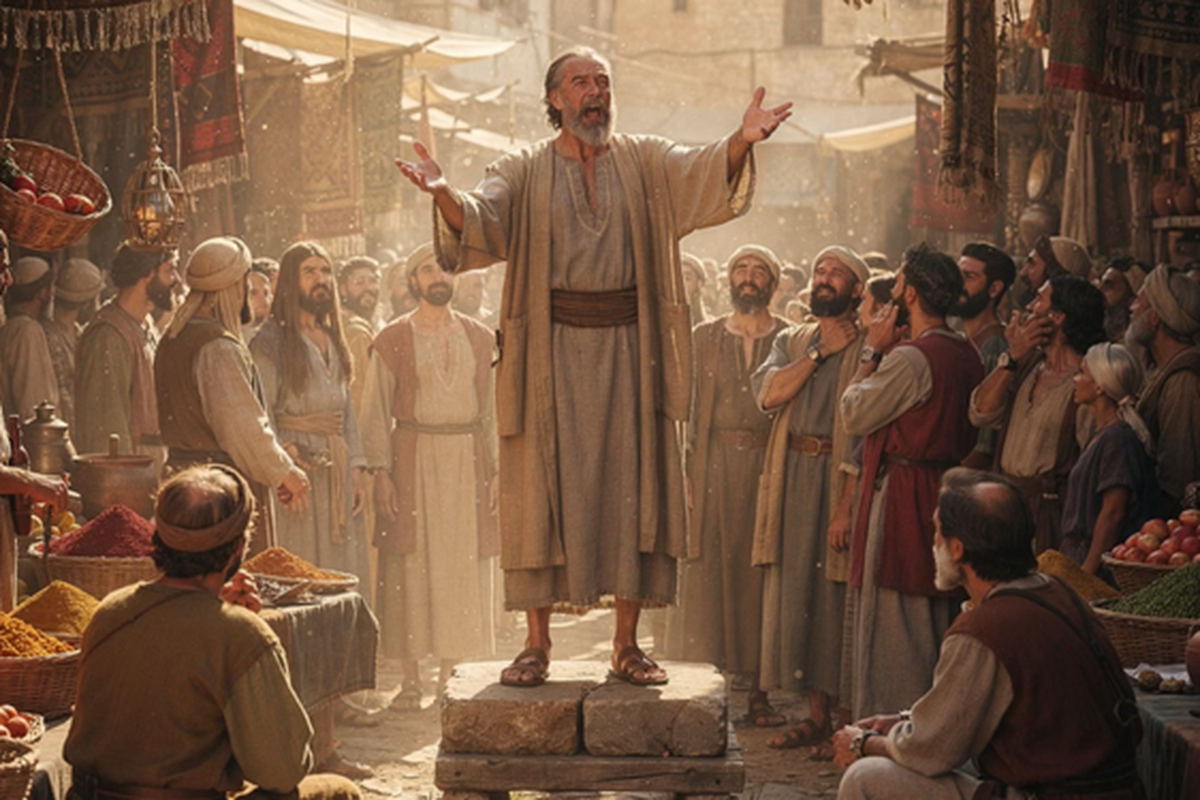
A Bible study on the apostolic model of witness—bold, Spirit-empowered, Scripture-centred, and focused on Jesus Christ.
“And daily in the temple, and in every house, they ceased not to teach and preach Jesus Christ.” — Acts 5:42
The apostles did not view evangelism as an occasional activity reserved for special events or particular people. Evangelism was a way of life—a natural expression of their obedience to Christ and their love for those who did not yet know Him. Their example provides a powerful model for every believer who desires to fulfil the Great Commission.
Evangelism Begins with Christ’s Command
The apostolic pattern of evangelism begins with obedience to the command of Jesus:
“Go ye into all the world, and preach the gospel to every creature.” — Mark 16:15
“Ye shall be witnesses unto me…” — Acts 1:8
The apostles evangelised because Jesus commanded them to do so. Their mission was not dependent on convenience, cultural acceptance, or favourable circumstances. Obedience to Christ was their motivation.
Evangelism, therefore, is not a calling reserved only for pastors, missionaries, or ministry leaders. Every believer is called to be a witness for Christ, wherever God has placed them and in every season of life.
Empowered by the Holy Spirit
The apostles did not depend solely on human wisdom, eloquence, or persuasion. Their boldness came from the power of the Holy Spirit.
Jesus promised:
“But ye shall receive power, after that the Holy Ghost is come upon you…” — Acts 1:8
We see this principle demonstrated in the life of Peter, who, “filled with the Holy Ghost,” boldly proclaimed the truth before those who opposed him (Acts 4:8).
The lesson for believers today is clear: effective evangelism requires dependence on God. Before we speak, we should pray. Rather than relying on our own abilities, we should ask the Holy Spirit to give us courage, wisdom, compassion, and the right words.
A simple prayer:
“Lord, fill me with Your Spirit and give me courage to speak Your name today.”
Preaching Jesus Christ Clearly and Centrally
At the heart of apostolic evangelism was one central message: Jesus Christ.
The apostles did not make self-improvement, moral philosophy, or social programmes the centre of their message. They proclaimed Christ—His death, His resurrection, and His offer of salvation.
The apostolic gospel centres on:
- The death of Christ — the atoning sacrifice for sin.
- The resurrection of Christ — victory over death.
- Repentance — turning away from sin and turning to God.
- Forgiveness — the cleansing and restoration that comes through Christ.
- Salvation by faith — receiving God’s gift through faith in Jesus.
Our witness should likewise point people to Jesus. While practical needs and personal stories can create opportunities for conversation, Christ must remain at the centre of the message.
Evangelising Publicly and Personally
The apostles understood that evangelism could happen anywhere. They preached in synagogues, marketplaces, homes, on roads, in prisons, and even before rulers. They proclaimed Christ publicly and shared the Gospel personally.
Acts 5:42 captures this pattern:
“And daily in the temple, and in every house, they ceased not to teach and preach Jesus Christ.”
There was a place for public proclamation, but there was also a place for personal conversations—one person, one family, and one relationship at a time.
The same is true today. Evangelism can take place in the workplace, at home, among friends and family, in community spaces, through church relationships, or even through online conversations. Wherever God gives us an opportunity, we can faithfully represent Christ.
Using Scripture to Persuade
The apostles did not rely merely on personal opinions or emotional arguments. They used Scripture to explain the truth and point people to Christ.
Paul, for example, “reasoned with them out of the scriptures” (Acts 17:2).
For believers to evangelise effectively, we should become familiar with God’s Word and be ready to share the Gospel clearly. Some foundational passages include:
- Romans 3:23 — All people have sinned and fall short of God’s glory.
- Romans 6:23 — Sin leads to death, but God offers eternal life through Jesus Christ.
- John 3:16 — God’s love is demonstrated through the gift of His Son.
- Romans 10:9–10 — Salvation is received through faith and confession of Jesus Christ.
Knowing Scripture helps us communicate the Gospel faithfully and confidently, while allowing God’s Word to speak with its own authority.
Speaking with Boldness Despite Opposition
The apostles faced threats, imprisonment, rejection, and persecution, yet they refused to remain silent.
They declared:
“We cannot but speak the things which we have seen and heard.” — Acts 4:20
Their boldness was not recklessness or arrogance. It was the result of deep conviction and dependence on the Holy Spirit. When opposition came, they responded by praying for greater boldness and continued to proclaim the Word of God.
For believers today, fear can easily become a barrier to evangelism. Fear of rejection, embarrassment, criticism, or not knowing what to say can keep us silent. The apostolic example challenges us to bring those fears to God and trust Him for the courage to speak.
Evangelism Driven by Compassion
Apostolic evangelism was not simply an act of duty. It was motivated by genuine concern for people who were far from God.
Paul expressed deep sorrow for those who did not know Christ, demonstrating that evangelism must flow from a heart of compassion.
Boldness and compassion belong together. We proclaim Christ courageously because we care deeply about people. We do not evangelise to win arguments; we evangelise because we desire people to know the love, forgiveness, and salvation found in Jesus Christ.
Evangelism That Leads to Discipleship
The apostolic model does not end when someone makes a decision to follow Christ. Evangelism must lead into discipleship.
Jesus commanded His followers not only to make disciples but also to teach them to obey His commands (Matthew 28:20). The goal is not simply to produce converts but to help people become growing, committed followers of Jesus.
This means walking alongside those who respond to the Gospel by:
- Inviting them into Bible study and Christian fellowship.
- Praying with and for them regularly.
- Helping them grow in their understanding of God’s Word.
- Connecting them with a local church community.
- Walking with them through one-to-one discipleship.
Evangelism opens the door to the Gospel, but discipleship helps people grow as lifelong followers of Christ.
Putting the Apostolic Model into Practice
The apostolic pattern can become a practical rhythm for every believer:
Pray
Ask God daily for boldness, open doors, and the right words to speak.
Prepare
Know the Gospel and become familiar with key Scriptures that help you explain the message of salvation.
Proclaim
Look for opportunities to share Jesus naturally, clearly, and lovingly.
Persist
Do not allow rejection, silence, or opposition to discourage you. Remain faithful and trust God with the results.
Disciple
Follow up with those who respond. Help them take their next steps of faith and grow in their relationship with Christ.
The Apostolic Formula
The apostolic model of evangelism brings together several essential elements:
Prayer → The Power of the Holy Spirit → Preaching Christ → Scripture → Boldness and Compassion → Discipleship
When these elements work together, evangelism becomes more than an occasional activity. It becomes a lifestyle of faithful witness and intentional disciple-making.
A Challenge for Every Believer
This week, consider putting the apostolic pattern into action.
- Who can you pray for?
- Who can you share the Gospel with?
- What Scripture can you prepare to share?
- What fears are keeping you from speaking about Jesus?
- Who might God be calling you to walk alongside in discipleship?
The call is simple: pray, prepare, proclaim, persist, and disciple.
May we become a people who, like the early apostles, are so convinced of the Gospel and so dependent on the Holy Spirit that we cannot help but speak about Jesus wherever God gives us an opportunity.
Closing Prayer:
“Lord Jesus, help me evangelize as the apostles did—with boldness, love, dependence on the Holy Spirit, and faithfulness to Your Gospel. Make me a courageous witness for You and use my life to help others know You, follow You, and grow in faith. Amen.”
This write-up is adapted from the uploaded presentation, “Evangelising After the Pattern of the Apostles.”
No responses yet